Concretes. Determination of strength by mechanical methods of nondestructive testing
Concrete strength assessment by the pull-out method

Testing and measuring equipment
ID: 00001
MATTEST Instrument · mattest.store
Determines in-situ concrete strength from anchor pull-out force. Maximum force: 55 kN.
Materials: Concrete
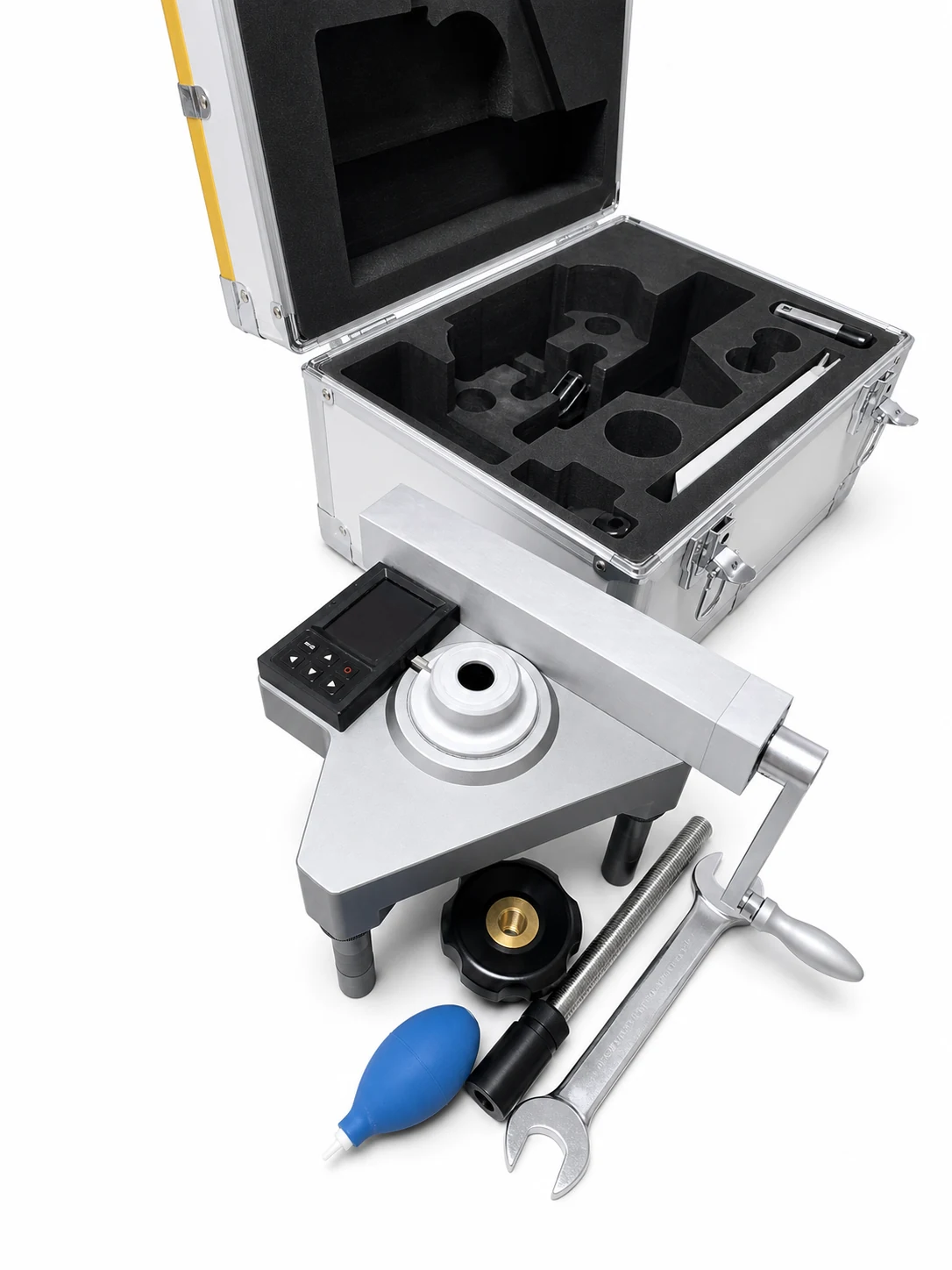
MIT STOUN 55 assesses concrete strength using the pull-out method. An anchor is installed in a prepared hole, the tester applies an extraction force and measures the load. The test result is used to calculate concrete compressive strength.
The portable instrument serves construction laboratories and structural assessment teams testing concrete directly in a structure. Its working load range is 5.5–55 kN, with 16 × 35 mm and 24 × 48 mm anchor assemblies.
The colour display shows the load graph in real time. The model description states automatic allowance for anchor slip. Pull-out results can also support calibration relationships for indirect concrete testing methods.
Select the test area, anchor size and preparation procedure for the applicable method. Check applicability and result processing against GOST 22690-2015 and the operating manual; the maximum force is not a concrete strength range in megapascals.
| Parameter | Value |
|---|---|
| Maximum pull-out force | 55 kN |
| Working load range | 5.5–55 kN |
| Load measurement error | ±1 % |
| Anchor sizes | 16 × 35 mm; 24 × 48 mm |
| Display | Colour |
| Instrument mass | 5 kg |
| Load graph | Real time |
| Anchor slip allowance | Automatic |
Normative references stated in the technical description of this model.
Concrete strength assessment by the pull-out method